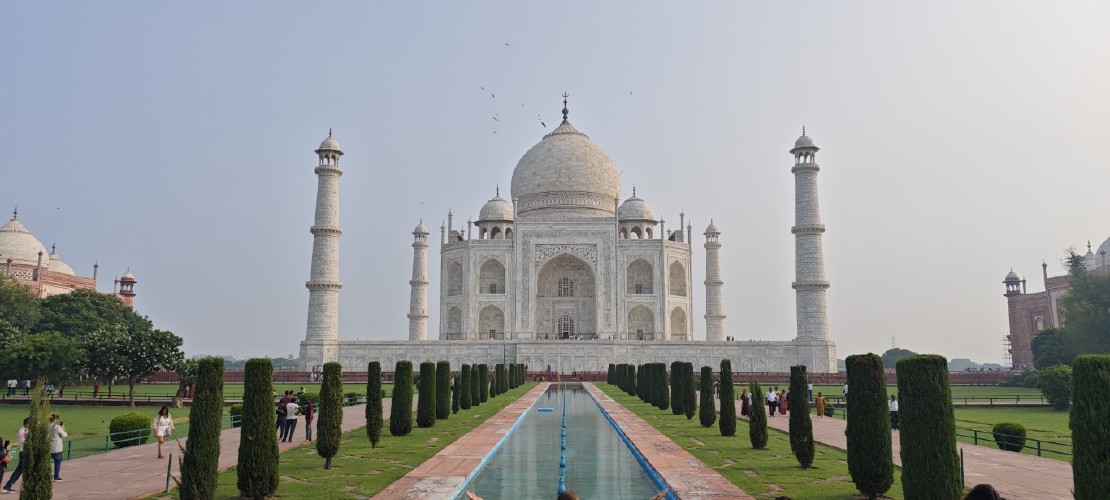
“India is not for beginners”. It’s a popular claim, it’s not exactly wrong. But it’s not restricted to experts. Here are my tips to travel and enjoy India.
Preface: I grew up in a mixed environment and I’m openly Sikh. India is a “Very easy mode” for me, but that doesn’t mean I can’t give tips.
The visa
Most visitors need a visa. The e-Tourist Visa is normally the easiest option: apply through the official Indian Visa Online website, rather than through a third-party agency. It is available to citizens of many countries, including most European countries, the United States, Canada and Australia. Nepalese and Bhutanese nationals are generally exempt.
There are 30-day, one-year and five-year e-Tourist Visas. The 30-day visa is double-entry; the longer versions are generally multiple-entry, but permitted stays and eligibility vary by nationality. Fees change and are reciprocal: for many European passports, expect roughly €9–35 for a 30-day visa, €35 for one year, and €70 for five years, plus a small card-processing charge. UK and US fees can be different.
Check the current country-by-country fee table before applying.
For land borders: use your e-visa for the first time at an airport. After that, a multi-entry e-visa can be used for land-border crossings. Check your exact situation before you go: the rules depend on the border and on the number of entries on your e-visa. Usually, standard visas are easier for land borders due to the complicated rules.
For a regular paper visa, you neet to get a 5 × 5 cm photo. It’s a specific format (Indian format) you can get it with any photographer or (sometimes) at embassies (for a fee). But it’s better to get in advance?
The Borders
I know only two land borders in India.
- Wagah-Attari near Pakistan. Currently (August 2026) closed until god knows when.
- Sonauli (With Nepal), close to Gorakhpur.
Essentially, the thing you’ll see is that whenever you enter India, expect to go back 20 years in time.
From China to Nepal, I felt like going back to what I think the seventies were like. From Nepal to India, it’s like stepping in the fifties.
There aren’t that many borders, maybe all of them aren’t dated, but expect them to be. Despite that, the Sonauli border wasn’t that frequented, I got invited for tea and had a great time despite a long wait (I was the only one…)
There is still no sea or land border between India and Sri Lanka.
The natural bridge has never been repaired or rebuilt, and apparently it might not make sense to do so, as crossings would be too uncommon (and a bridge would either block small boats or cost too much).
However, feasibility studies are starting again.
A floating bridge (Norway style) would probably make sense, but I’m no engineer…
Flights
The best way to enter the country and use an e-visa is by air. Just remember that e-visas are valid only at designated entry points; see the visa section above.
In Europe, we have plenty of cheap flights to Delhi, Mumbai, Cochin and Chennai. Expect to pay €500–700 for a return flight. Before 2019, it was only €350. How we have fallen…
Note: We used to have frequent, rather cheap direct Paris–Chennai flights, but they stopped recently… So now flights are routed through New Delhi or have to stop in London… I heard flights from Canada and Australia were common too.
Delhi airport is nice, easy to access and easy to navigate!
Male vs Female Schism
India is globally not a solo female destination. The south-west (Goa and Kerala) has a reputation for being OK in that regard. Punjab is also better, as are the more mountainous states; the rest generally is not.
If you’re a Desi woman, you will get a quarter of the gaze European women are subjected to. Women from elsewhere may face men staring, trying to touch them, harassing them and sometimes worse. Blondes should be even warier.
The north (Delhi belt) is not for solo women. I have to repeat that. But it’s NOT SAFE.
I don’t know enough firsthand about Mumbai, Kolkata and central India, but they are not known for being safe enough.
Men have it easy. Indian women, in my experience, will not approach you, will always play it safe, and will not be any nuisance.
Note: there are a lot of cool young Indian men too, and usually, those guys are popular enough with women that they won’t bother with tourists. It’s all about education.
My advice for women: If you’re strong and experienced, you can try, but be warned. Otherwise, do as Indian women do: stay in a group. Don’t make yourself smaller or feel ashamed of your clothing. Many men will say, “Oh, you were too scantily clad,” while the women wore perfectly fine clothing.
- 1/ India is not that conservative
- 2/ It’s up to the men to evolve their mentality, not up to the women to regress
- 3/ If no one ever fights that behaviour, it’s not going to change.
There, I said everything I wanted to say.
Respecting the culture
As a tourist, it’s important to be mindful and respectful. Jain and Hindu temples are often closed to tourists because of disrespectful behaviour or tourists disrupting ceremonies.
If there’s a ceremony you do not understand, respect it and move on. If you are invited by a believer or a group of believers, then it’s better. You will face a lot of curious faces, if you’re curious too, you’ll see a kinder face from the believers and find out they are actually quite welcoming, but a bit shy.
If you have prior knowledge of Hinduism or Jainism, it’s much easier. For example, I have no trouble getting into places venerating Lord Krishna, but that’s due to shared culture. Anyone with a brain can sense it.
Also: don’t litter, even if locals do it. They are still learning civic sense.
If visiting the Ganges River or places like Varanasi, you need to be mindful. In Varanasi, there are a lot of funerary rituals. Don’t step in. And yes, ashes are released into the river. The Ganges might actually be the world’s first non-Newtonian river: more viscous than liquid. For real.
For Hindus, it is important that their ashes are released in the Ganges. This is not always possible, especially for people born or living abroad (even for those in Sri Lanka, speaking from experience here).
Blending in
As much as you can, try to blend in, learn the nods, speak words of the local languages, learn the codes. That’ll distinguish you from a simple visitor. Be nice, be curious, be patient, be happy, never angry.
If you have Desi and/or Dravidian roots, leverage them, if not, it’s alright, you can still learn about the culture and try it a bit. It’s not appropriation, it’s a way of respect. And it’s fun.
If you know some choreography or Garba (a Gujarati dance, often seen when wealthy, annoying Gujaratis do it everywhere they travel) and see some public dancing (yes, it happens!), you could even ask to join in. You will see another side of India, have fun and meet people.
People having fun are usually much more disposed to be kind and friendly (without scams)
Scams
Disclaimer: I’ve never had any scams in India… But as I said, for me it’s different and easy.
The classics are the “your hotel is closed” or “your train was cancelled” lie, fake tourist-information offices, taxi or rickshaw drivers taking you to a shop for commission, inflated fares when there is no meter, and strangers offering to guide you before demanding payment. In popular tourist areas, be suspicious of anyone who insists that an attraction is closed and offers an alternative. Check directly with your hotel, railway operator or the official ticket office instead.
This does not mean everyone is trying to scam you. Agree on a fare before getting into an auto-rickshaw when there is no meter, use official transport counters where available, and do not let anyone rush you into buying something or changing your plans.
Who to trust
Sikhs are the best people to trust, they won’t cheat you and will treat you with respect. But be careful: some people wear turbans without being Sikhs, and some Sikhs do not wear turbans. If you can spot them, they can be your allies, whether it is for help within the city, protection, fair transportation or advice when entering a Gurdwara; they usually will not mind. (Especially for transportation, if it’s their job lol.)
How to spot them?
If you see someone, whether a woman or a man, with long uncut hair, a Kara (steel bracelet), a Kirpan (dagger) and often a turban (which means you will not see the long hair, but might spot a beard on men), they might be Sikh. Emphasis on might.
Otherwise, like everywhere, students (in uniforms) and women are the best choices. Young women often speak very good English (with an Indian accent) and will generally not mind a tourist approaching them, especially if you appear safe. Students are fun, but be careful, when in group, many will try to get pictures with you or will try to trick you with some Tiktok cringe trend.
Note about trains
Careful: non-Indians cannot easily book trains now unless they have a local number. A local SIM Card is thus very important. If, like me, you like to use a European SIM with data in India (it’s very cheap for me), then be prepared to have a pen, your ID card and a hell of a lot of patience. Really.
Night buses and buses in general can be nicer than trains. Step into a station and see the mess.
Some cities, like Agra and Delhi do have a subway, and a very nice one. It’s fast, super clean, modern and the population taking it is much more ’elite’ than the rest.
Experiences you can try and my advice
Just a small list, for fun. Trying these will definitely improve your outlook on the country and make the trip more enjoyable.
- Have Langar (communal meal) in a Gurudwara (House of the Guru, where Sikhs gather)
- Visit all kinds of religious buildings (Jain, Baha’i, Sikh, Hindu, Christian, Muslim and Buddhist) and experience the diversity
- See and experience life and death through another lens in Varanasi
- Go both to North India and South India and spot the difference between the two people and cultures (Aryan vs Dravidian)
- Explore the many gardens and cafés in the big cities, it’s nice to take some respite from the usual heat and to get some quality food/coffee.
- Take some classes (cooking, dancing, yoga) and acquire another part of the culture
- Try upscale restaurants, they will blow your mind. And, comparatively to Europe, they are not that expensive (10€/person?)
- Don’t mind spending, if you’re a rat, you won’t enjoy things. Don’t haggle for cents, it’s seriously annoying.
- Take your time. Really.
- No fights. Indians are not fighters, nor belligerent. Don’t look for fights.
ATMs / Cost / Gifts
India is not as inexpensive as it used to be, be warned.
Cash is still very common, but ATMs are available throughout the country and more and more establishments now take the card.
If you’re looking for gifts to bring home:
- They have a lot of nice textiles, scarves and clothes
- Artisans are plentiful; they make nice things
- Spices are easy to buy and bring home
Archaeological finds/artifacts are not for sale! Don’t steal that stuff by bringing it home.
Final Notes
As long as you respect the culture, take your time, enforce your boundaries and learn how to say no, it should be fine. Doesn’t sound too hard, right?
I’ll publish all my itineraries for later, it will take me some time.